Blog Article
Supporting Teens with Depression: When a Higher Level of Care May Help
Is your teen struggling with depression? Learn to recognize evolving signs, explore higher level of care options like IOP/PHP, and find intensive treatment for teen mood disorders.
Supporting Teens with Depression: When a Higher Level of Care May Help
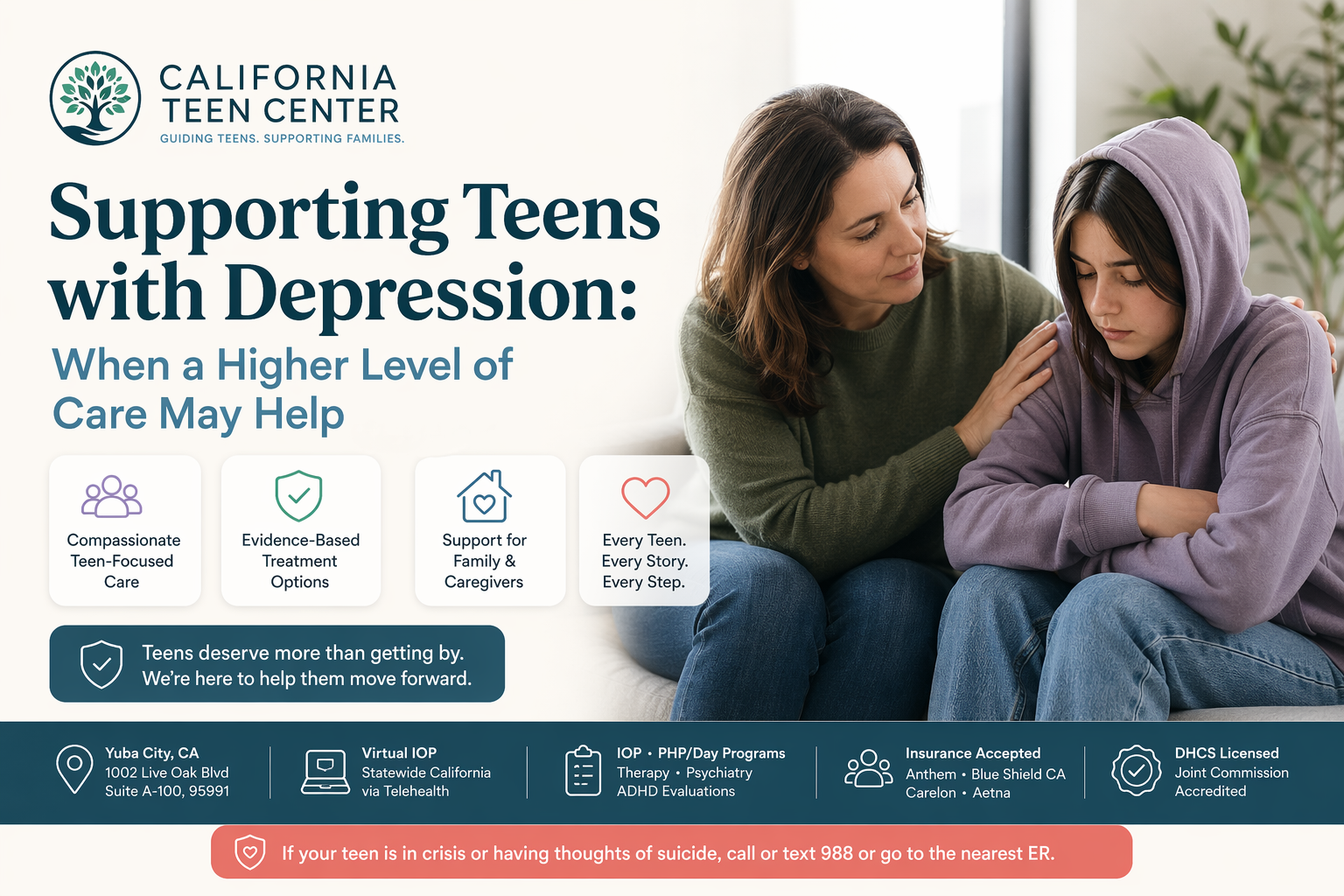
Watching your teen struggle with sadness, irritability, or withdrawal can be one of the most heartbreaking experiences for a parent. While the teenage years are naturally marked by emotional ups and downs, persistent feelings of despair or a significant change in behavior can signal something more serious: teen depression. It's a complex mental health challenge that often requires more than just time to "grow out of it."
For many families, the journey begins with recognizing these shifts and exploring support options. Sometimes, traditional outpatient therapy is a perfect fit. However, when symptoms are severe, don't improve, or impact daily functioning significantly, a higher level of care may be the necessary next step. Understanding these options is crucial for ensuring your teen receives the comprehensive support they need to regain their emotional balance and thrive.
This article will guide you through recognizing the subtle yet critical signs of teen depression, explore various adolescent depression treatment pathways beyond weekly therapy, and highlight how structured, intensive support programs can be profoundly beneficial in your teen's recovery journey.
Recognizing the Evolving Signs of Depression in Adolescents
Teen depression often manifests differently than adult depression, making it challenging for parents to identify. What might seem like typical teenage moodiness or rebellion could actually be a cry for help. Being attuned to both subtle and overt changes in your child's behavior, emotions, and daily routines is paramount.
Depression in adolescents can present with persistent sadness, hopelessness, or a loss of interest in activities they once enjoyed. They might express feelings of worthlessness, guilt, or self-blame. Beyond these classic signs, you may notice increased irritability, anger, or agitation, which are common depressive symptoms in teens. Social withdrawal is another key indicator; your teen might start isolating themselves from friends and family, spending more time alone, or struggling to maintain social connections.
Subtle Changes vs. Obvious Distress
Sometimes, the signs of teen depression are not overt. Your teen might experience changes in sleep patterns, such as sleeping much more or having difficulty sleeping. Appetite changes, leading to significant weight loss or gain, can also be a red flag. Academic performance might decline, or they might begin refusing to go to school entirely. Physical complaints, like frequent headaches or stomachaches, with no apparent medical cause, can also be manifestations of underlying depression. In more severe cases, you might observe risky behaviors, self-harm, or hear direct expressions of suicidal thoughts. These are urgent indicators that require immediate professional intervention.
When to Seek Professional Help
If you observe several of these signs persistently over two weeks or more, or if your teen's symptoms are significantly impacting their ability to function at home, school, or with friends, it's time to seek professional help. Early intervention is critical for improving outcomes and preventing the condition from worsening. A mental health professional, such as a therapist or psychiatrist specializing in adolescents, can conduct a thorough assessment and recommend the most appropriate adolescent depression treatment plan.
Beyond Weekly Sessions: Exploring Comprehensive Adolescent Depression Treatment Options
When your teen is struggling with depression, and traditional weekly therapy sessions aren't providing sufficient relief or progress, it's natural to wonder what other options are available. The mental health field offers a spectrum of care levels designed to meet varying needs, moving beyond standard outpatient care to more intensive, structured programs.
Outpatient individual therapy often serves as the first line of defense for mild to moderate depression. In these sessions, teens work one-on-one with a therapist, learning coping strategies, processing emotions, and developing healthier thought patterns. While invaluable, some teens require a more robust environment to address their complex emotional needs effectively. This is where a higher level of care becomes essential.
The Role of Outpatient Therapy
Outpatient therapy, whether individual or family-based, forms the foundation of adolescent depression treatment. It provides a safe, confidential space for teens to explore their feelings and learn new skills. However, for teens with severe symptoms, co-occurring disorders, or those who are at risk of self-harm, the support offered by once-a-week sessions might not be enough to create lasting change or ensure their safety. It's crucial for parents to understand that seeking more intensive support is not a failure, but rather a responsible and proactive step toward their child's well-being.
When More Support is Needed
When symptoms are escalating, academic performance is severely compromised, social interactions cease, or safety concerns arise, a higher level of care such as an Intensive Outpatient Program (IOP) or a Partial Hospitalization Program (PHP) becomes necessary. These programs offer a structured therapeutic environment for several hours a day, multiple days a week, providing a concentrated dose of therapy and support without requiring an overnight stay. They are designed to help teens stabilize their mood, develop advanced coping skills, and address underlying issues in a safe and supervised setting.
To understand these options in more detail, consider reading about What is a Teen Intensive Outpatient Program (IOP)? A Parent's Guide. For a comparative overview of different treatment intensities, our article on Teen IOP vs. PHP vs. Weekly Therapy: Choosing the Right Mental Health Support can provide further clarity. These programs offer a bridge between traditional therapy and inpatient hospitalization, allowing teens to live at home while receiving significant clinical support.
The Benefits of Structured Care: Intensive Treatment for Teen Mood Disorders
When teen depression requires a more robust approach, intensive programs like Intensive Outpatient Programs (IOP) and Partial Hospitalization Programs (PHP) offer unique advantages. These structured environments are specifically designed to provide comprehensive, multi-faceted intensive treatment for teen mood disorders, going beyond what traditional weekly therapy can offer.
The primary benefit lies in the intensity and frequency of therapeutic interventions. Teens participate in group therapy, individual counseling, and family sessions several times a week, ensuring consistent support and skill-building. This immersive approach helps stabilize acute symptoms, teaches advanced coping mechanisms, and addresses the root causes of depression more effectively.
Holistic Approach
A key aspect of these programs is their holistic nature. They integrate various therapeutic modalities, such as Cognitive Behavioral Therapy (CBT) to challenge negative thought patterns, Dialectical Behavior Therapy (DBT) to improve emotional regulation and interpersonal effectiveness, and expressive therapies like art or music. Psychiatric oversight is also a critical component, with medication management and monitoring by child and adolescent psychiatrists ensuring a comprehensive treatment plan. This multi-pronged approach supports healing not just emotionally, but also psychologically and behaviorally.
Skill Building & Peer Support
Intensive programs provide a powerful platform for skill development. Teens learn practical tools for managing stress, navigating difficult emotions, improving communication, and building healthy relationships. A significant advantage is the peer support component. Being in a group with other teens facing similar challenges reduces feelings of isolation and fosters a sense of community and understanding. This shared experience can be incredibly validating and empowering, demonstrating that they are not alone in their struggles.
Academic Integration
One of the most appealing aspects for parents and teens is the ability to maintain academic progress and family life. Many IOPs, like those offered at California Teen Center, provide flexible schedules (e.g., after-school programs) that allow teens to continue with their schooling. This integration helps teens develop coping skills they can immediately apply in their daily lives, facilitating a smoother transition back to full-time academic and social engagement post-program. For a broader look at available resources, explore Comprehensive Teen Mental Health Treatment Options in California.
Navigating Logistics: Insurance and Accessibility for Your Teen's Mental Health Care
Deciding on a higher level of care for your teen's depression is a significant step, and practical considerations like insurance coverage and accessibility often come to the forefront. Understanding how to navigate these logistics can ease the burden on parents, allowing them to focus more on their teen's healing journey.
Accessing specialized mental health services in California is a critical concern for many families. California Teen Center is committed to making adolescent depression treatment as accessible as possible. This commitment is reflected in our robust acceptance of major insurance providers, helping to alleviate the financial stress often associated with intensive programs.
Understanding Your Coverage
Many parents worry about the cost of intensive mental health programs. California Teen Center proudly accepts a range of insurance plans, including Anthem, Blue Shield of California, Carelon, and Aetna. We understand that deciphering insurance benefits can be complex, which is why our team is available to assist families in verifying their coverage and understanding their benefits. Knowing your insurance benefits upfront allows you to make informed decisions without financial surprises.
To get started, we encourage you to Verify Your Insurance Today through our confidential online form. This step can quickly clarify what services are covered, giving you peace of mind as you consider treatment options.
Telehealth Options for California Families
Beyond our Yuba City location, we recognize the diverse needs and geographical spread of families across the state. For those who cannot attend in-person programs due to location or other constraints, our Virtual Intensive Outpatient Program (IOP) offers statewide telehealth mental health support. This means that teens anywhere in California can access our high-quality, structured care from the comfort and familiarity of their home, ensuring that distance is not a barrier to receiving timely intensive treatment for teen mood disorders.
To learn more about how virtual care can benefit your family, read our article on Virtual IOP for Teens in California: Statewide Telehealth Mental Health Support. Our programs are DHCS Licensed and Joint Commission Accredited, reflecting our commitment to maintaining the highest standards of clinical excellence and patient safety. For detailed insights into financial planning for your teen's mental health journey, consult our Insurance Coverage for Teen Mental Health Programs in California: A Parent's Guide.
Frequently Asked Questions About Teen Depression and Higher Levels of Care
What are the first steps if I suspect my teen has depression?
If you suspect your teen has depression, the first step is to talk to them openly and without judgment. Express your concerns and listen to what they have to say. Next, schedule an appointment with your pediatrician or a mental health professional specializing in adolescents for an assessment. They can help differentiate between typical teenage ups and downs and clinical depression, and recommend appropriate next steps.
How is a "higher level of care" different from weekly therapy?
A higher level of care, such as an Intensive Outpatient Program (IOP) or Partial Hospitalization Program (PHP), involves more frequent and intensive therapeutic interventions than traditional weekly therapy. While weekly therapy might be 1-2 hours a week, IOPs typically involve 3-5 days a week for several hours per day, and PHPs can be even more intensive. These programs offer a more structured environment, multiple types of therapy (individual, group, family), psychiatric oversight, and a stronger focus on skill-building and stabilization for more severe symptoms of teen depression.
Will my teen miss too much school in an IOP or PHP?
Many IOPs and PHPs for teens are designed with academic schedules in mind. Programs like California Teen Center's often offer after-school hours, allowing teens to continue attending school while receiving intensive treatment. The goal is to provide comprehensive support without disrupting their academic progress, integrating therapy with their daily lives.
Does insurance cover intensive programs for teen depression?
Yes, many insurance plans, including Anthem, Blue Shield of California, Carelon, and Aetna, provide coverage for intensive mental health programs for teens, such as IOPs and PHPs. Coverage can vary depending on your specific plan and the medical necessity of the treatment. It's always best to verify your benefits directly with the treatment center or your insurance provider. California Teen Center can assist you with this verification process.
Guiding Your Teen Towards Hope and Healing
Witnessing your teen struggle with teen depression is an incredibly difficult experience, but you are not alone, and help is available. Recognizing the evolving signs of teen depression and understanding when a higher level of care might be beneficial are crucial steps in guiding your child toward recovery. While traditional therapy plays a vital role, intensive programs like IOP and PHP offer structured, comprehensive intensive treatment for teen mood disorders, providing the focused support many adolescents need to regain their footing.
At California Teen Center, we believe every teen deserves the opportunity to heal and thrive. Our DHCS Licensed and Joint Commission Accredited programs are designed with a compassionate, parent-first approach, ensuring your teen receives evidence-based care tailored to their unique needs. Whether through our in-person programs in Yuba City or our Virtual IOP statewide, we are here to support your family every step of the way. If you're seeing signs of teen depression that worry you, don't hesitate to reach out. Taking that first step can make all the difference.