Blog Article
What is a Teen Intensive Outpatient Program (IOP)? A Parent's Guide
Discover what a Teen Intensive Outpatient Program (IOP) is and how it provides structured, compassionate mental health treatment for adolescents in Yuba City and across California. Learn about the benefits of teen IOP for anxiety, depression, ADHD, and more.
What is a Teen Intensive Outpatient Program (IOP)? A Parent's Guide
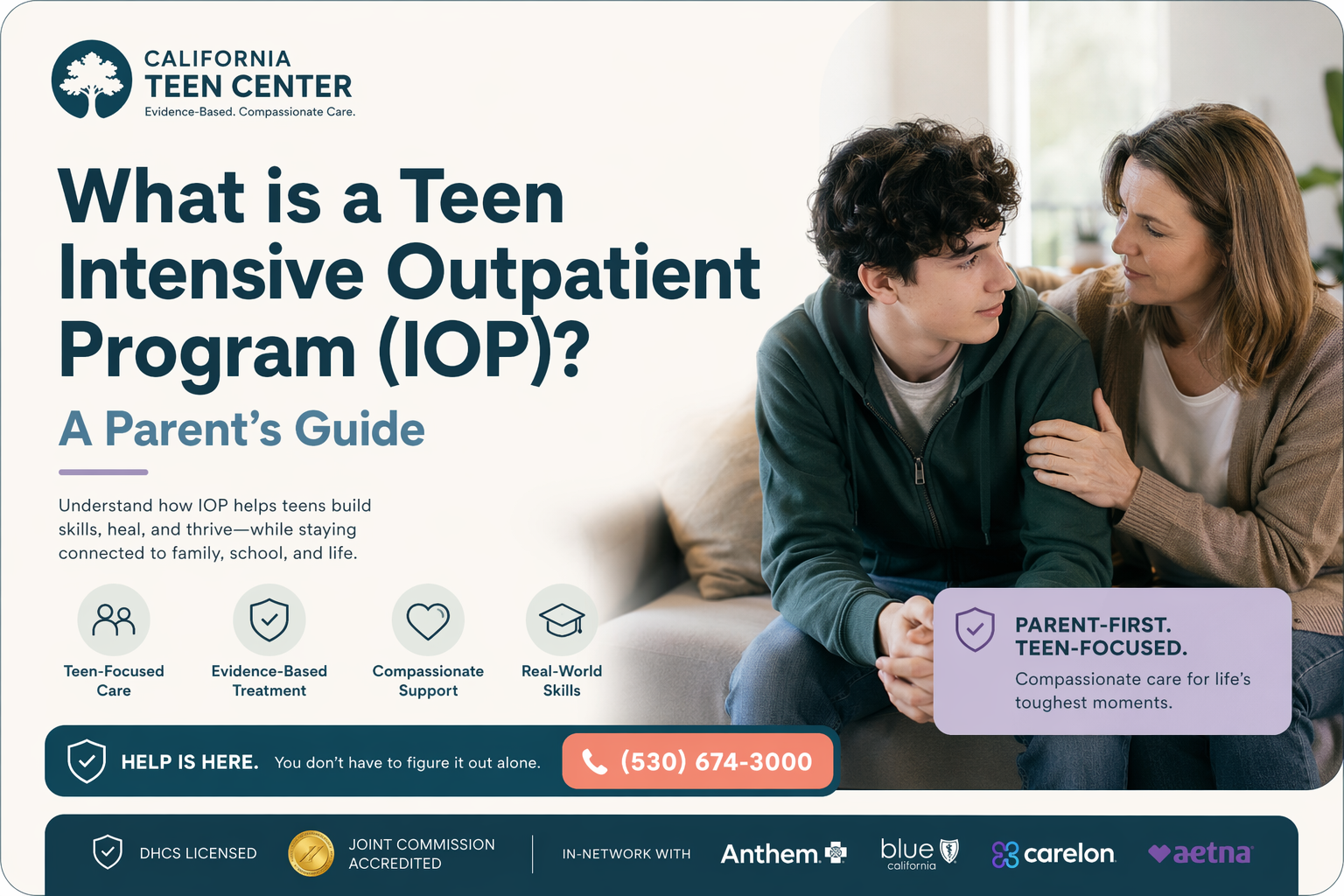
As a parent, navigating the complex world of adolescent mental health can feel overwhelming, especially when your teen is struggling. You might be hearing terms like "therapy," "inpatient," or "outpatient programs," and wondering what they all mean for your child. One effective and increasingly common form of mental health support for adolescents is an Intensive Outpatient Program (IOP). But what exactly is a teen Intensive Outpatient Program, and how can it benefit your child?
A teen IOP offers structured, comprehensive mental health treatment without requiring your child to live at a facility. It’s designed to provide a higher level of care than weekly therapy sessions, making it ideal for teens who need more support but can still function at home and in school. This guide will walk you through everything you need to know about what is a teen intensive outpatient program, its structure, its benefits, and how it can help your family find healing and hope. If your teen is struggling with depression, anxiety, ADHD, or other challenges, understanding IOP can be a crucial step toward their recovery.
Understanding Teen IOP: A Comprehensive Overview for Parents
A Teen Intensive Outpatient Program (IOP) is a structured mental health treatment designed for adolescents who require more support than traditional weekly therapy but do not need the 24/7 supervision of an inpatient or residential program. At its core, an IOP provides intensive therapeutic interventions several days a week, allowing teens to continue living at home and attending school (or an alternative educational setting). This balance is crucial for maintaining a sense of normalcy and practicing newly learned coping skills in real-world environments.
IOPs are staffed by multidisciplinary teams, including licensed therapists, psychiatrists, and case managers, all working together to create a holistic treatment plan. The program typically focuses on a range of issues common among adolescents, such as depression, anxiety, ADHD, suicidal ideation, school refusal, and LGBTQ+ mental health challenges. The primary goal is to stabilize symptoms, teach effective coping strategies, improve communication skills, and strengthen family dynamics. For many parents, it offers a vital middle ground when weekly therapy isn't enough, but a full-time residential program feels too extreme or isn't necessary.
Who Benefits Most from a Teen IOP?
An Intensive Outpatient Program is often recommended for teens who are experiencing significant emotional or behavioral difficulties that impact their daily functioning, but who are not an immediate danger to themselves or others. This might include:
- Teens with escalating symptoms of depression or anxiety that disrupt school, social life, or family relationships.
- Adolescents struggling with self-harm or past suicidal ideation, where ongoing monitoring and support are crucial.
- Teens who have recently been discharged from a psychiatric hospital or residential treatment and need a step-down program to support their transition back home. You can learn more about this transition in our article, "Aftercare for Teens: Transitioning from Psychiatric Hospitalization Support".
- Those with chronic school refusal or significant academic stress due to mental health challenges.
- Teens who haven't made sufficient progress in traditional outpatient therapy.
Goals of an Intensive Outpatient Program
The overarching goal of an IOP is to equip teens with the tools they need to manage their mental health challenges effectively and thrive. Specific goals often include:
- Reducing symptoms of mental health conditions.
- Developing healthy coping mechanisms and emotional regulation skills.
- Improving self-esteem and self-awareness.
- Enhancing communication and problem-solving skills within the family.
- Building a strong support system among peers.
- Preventing relapse and promoting long-term recovery.
How IOP Supports Adolescent Well-being and Development
A well-structured Intensive Outpatient Program offers a rich therapeutic environment that addresses the unique developmental needs of adolescents. Unlike individual therapy alone, an IOP integrates various therapeutic modalities and provides a consistent, supportive community, helping teens feel less isolated in their struggles. This comprehensive approach fosters growth not just in managing symptoms, but in building a stronger sense of self and developing essential life skills.
One of the cornerstones of IOP is group therapy. In these sessions, teens connect with peers facing similar challenges, creating a powerful sense of validation and belonging. They learn from each other's experiences, practice new social skills, and gain perspective, often realizing they are not alone. Beyond peer support, IOPs typically incorporate evidence-based practices such as Cognitive Behavioral Therapy (CBT) and Dialectical Behavior Therapy (DBT). CBT helps teens identify and change negative thought patterns, while DBT focuses on mindfulness, emotional regulation, distress tolerance, and interpersonal effectiveness. These skills are vital for managing intense emotions, reducing impulsive behaviors, and navigating complex social situations.
Tailored Therapeutic Modalities
At California Teen Center, our IOPs leverage a variety of proven therapeutic approaches to meet each adolescent's unique needs:
- Individual Therapy: Teens meet one-on-one with a therapist to address personal challenges, set goals, and process emotions in a private, supportive setting.
- Group Therapy: Small group sessions provide a safe space for teens to share experiences, practice communication skills, and receive feedback from peers and therapists. This fosters a sense of community and reduces feelings of isolation.
- Family Therapy: Recognizing that a teen's mental health impacts the entire family, family therapy sessions help improve communication, resolve conflicts, and educate parents on how to best support their child's recovery journey.
- Skill-Building Workshops: These workshops teach practical coping strategies for stress, anxiety, depression, anger management, and more. Topics often include mindfulness, relaxation techniques, and problem-solving skills.
- Psychiatric Oversight: Access to psychiatric care ensures that medication management, if needed, is carefully monitored and integrated into the overall treatment plan.
Holistic Development and Peer Support
The intensive nature of an IOP allows for consistent practice of new skills, reinforcing positive changes. Teens learn to identify triggers, develop effective responses, and build resilience in the face of adversity. This level of support often leads to significant improvements in self-esteem, academic performance, and social relationships. The peer component is particularly impactful, as adolescents often prioritize peer validation. Seeing others successfully navigate similar struggles can be incredibly motivating and empowering. For a deeper understanding of when an IOP is the right choice, compare it with other options in our article, "Teen IOP vs. PHP vs. Weekly Therapy: Choosing the Right Mental Health Support."
The Structure of an After-School IOP: Keeping Teens Engaged
One of the most significant advantages of a teen Intensive Outpatient Program is its ability to provide comprehensive care without completely disrupting a teen's daily life. Many IOPs, including those at California Teen Center, are specifically designed to be "after-school" programs. This means sessions are scheduled outside of regular school hours, typically in the late afternoon or early evening, allowing adolescents to continue their education, maintain social connections, and participate in extracurricular activities. This flexibility is key to promoting engagement and minimizing disruption during a critical developmental period.
An after-school IOP offers a structured yet adaptable environment. Teens typically attend several times a week, for a few hours each session. This consistent engagement provides the therapeutic intensity needed for significant progress, while still respecting their need for routine and personal time. The balance ensures that the treatment supports their overall well-being rather than becoming another source of stress. For parents in the area, our "Teen IOP in Yuba City: After-School Mental Health Support for Adolescents" provides more local details.
Typical IOP Schedule and Components
While schedules can vary slightly, a common structure for an after-school teen IOP might look like this:
- Frequency: 3 to 5 days a week.
- Duration: 3 to 4 hours per session.
- Therapeutic Activities: Each session is packed with a variety of activities, including:
- Group Therapy: As discussed, this is a core component, fostering peer support and skill-building.
- Individual Counseling: Regular one-on-one time with a therapist ensures personalized attention and goal setting.
- Family Therapy Sessions: Often scheduled separately to involve parents and guardians in the healing process.
- Educational Workshops: Focused on mental health topics, coping strategies, and life skills.
- Art or Expressive Therapies: Creative outlets for emotional expression.
- Academic Support: Some programs offer quiet spaces or assistance with homework, recognizing the importance of school success.
Maintaining Education and Social Life
The after-school model is particularly beneficial for teens struggling with school refusal or academic stress, as it helps them reintegrate into their educational environment while receiving robust mental health support. It also allows them to keep up with friendships and participate in healthy hobbies, which are crucial for adolescent development and a strong support system. By integrating treatment into their existing routines, teens are more likely to feel a sense of empowerment and ownership over their recovery journey, making the transition back to full-time independent functioning smoother and more sustainable.
When to Consider an IOP: Signs Your Teen Might Benefit
Deciding on the right level of mental health care for your teenager is a deeply personal and often challenging decision. It's common for parents to wonder if their child's struggles warrant more than weekly therapy, or if an IOP is truly necessary. Recognizing the signs that your teen might benefit from a more intensive program is the first step toward getting them the help they need. An IOP can be a critical intervention point when a teen's mental health challenges are significantly impacting their daily life, but they don't require inpatient care.
Consider an IOP if you observe persistent or escalating concerns that are no longer manageable with standard outpatient therapy. This might include a noticeable decline in academic performance, social withdrawal, or increased conflict at home. Parents often feel a gut instinct when something isn't right, and validating that feeling is important. Seeking a professional assessment can provide clarity and guidance on whether an Intensive Outpatient Program is the appropriate next step for your child's well-being.
Key Indicators Your Teen May Need IOP:
- Worsening Symptoms: If your teen's symptoms of depression, anxiety, ADHD, or other conditions are becoming more severe, frequent, or prolonged despite ongoing weekly therapy. This could manifest as persistent sadness, panic attacks, extreme irritability, or profound difficulty concentrating. For teens struggling with profound sadness, our article "Supporting Teens with Depression: When a Higher Level of Care May Help" offers crucial insights.
- Impact on Daily Functioning: Significant interference with school attendance or performance (e.g., school refusal, failing grades), social life (isolating from friends), or family relationships.
- Self-Harm or Suicidal Ideation: While not requiring immediate hospitalization, any history or current thoughts of self-harm or suicidal ideation necessitate a higher level of care to ensure safety and provide intensive coping skills.
- Inability to Cope: Your teen consistently expresses an inability to manage stress, emotions, or daily challenges, leading to frequent meltdowns, withdrawal, or disruptive behaviors.
- Transition from Higher Level of Care: An IOP serves as an excellent "step-down" program for teens transitioning home after inpatient hospitalization or residential treatment, providing essential continued support to prevent relapse.
- School Refusal/Avoidance: Persistent refusal to attend school or extreme anxiety surrounding school, which can be a debilitating symptom of underlying anxiety or depression. Our article "Teen Anxiety & School Avoidance: Finding Support for Your Child in California" delves deeper into this challenge.
- Substance Use: Early signs of substance use alongside mental health issues may also indicate a need for more comprehensive support.
- LGBTQ+ Specific Challenges: Teens facing unique mental health stressors related to their LGBTQ+ identity may benefit from the supportive and affirming environment of an IOP.
If you recognize any of these signs, reaching out for a professional assessment is crucial. An IOP offers a comprehensive, supportive, and structured environment where teens can develop the resilience and skills needed to navigate their challenges effectively, setting them on a path toward lasting recovery and well-being.
The California Teen Center Difference: Compassionate Care and Expert Support
Choosing a mental health treatment center for your teen is one of the most important decisions you'll make as a parent. At California Teen Center, located at 1002 Live Oak Blvd Suite A-100, Yuba City, CA 95991, we understand the profound trust you place in us. Our commitment is to provide a safe, nurturing, and highly effective environment where adolescents can heal, grow, and thrive. We believe that true healing comes from a combination of evidence-based practices, compassionate care, and a deep understanding of the unique challenges facing today's teens.
Our programs, including Intensive Outpatient (IOP) and Partial Hospitalization (PHP/Day Programs) in Yuba City, along with Virtual IOP (telehealth statewide across California), are built on a foundation of clinical excellence and a client-centered philosophy. We are proudly DHCS Licensed and Joint Commission Accredited, reflecting our unwavering dedication to the highest standards of quality and safety in mental health care. This accreditation means we meet rigorous national benchmarks for patient safety and treatment effectiveness, offering you peace of mind that your child is in expert hands.
Comprehensive Services Tailored to Your Teen's Needs
California Teen Center offers a broad spectrum of services designed to address various adolescent mental health challenges:
- Intensive Outpatient Programs (IOP): Structured, after-school care allowing teens to live at home while receiving intensive therapy.
- Partial Hospitalization Programs (PHP/Day Programs): A more intensive day program for teens needing significant daily support.
- Virtual IOP (Statewide California): Accessible telehealth options for families across California, providing flexibility and convenience without compromising on quality. Find out more about this flexible option in "Virtual IOP for Teens in California: Statewide Telehealth Mental Health Support."
- ADHD Evaluations: Comprehensive assessments to accurately diagnose ADHD and develop effective management strategies.
- Outpatient/Step-Down Support: Continued care for teens transitioning from higher levels of treatment or those needing ongoing support.
- Therapy & Psychiatric Oversight: Individual, group, and family therapy, coupled with expert psychiatric evaluation and medication management when necessary.
We specialize in treating a wide range of conditions, including depression, anxiety, ADHD, suicidal ideation, school refusal, and mental health challenges specific to the LGBTQ+ community. Our approach is parent-first, ensuring you are involved and informed every step of the way. We accept Anthem, Blue Shield of California, Carelon, and Aetna insurance, and our team is ready to assist you with insurance verification to ease the financial burden. To learn more about coverage, refer to our "Insurance Coverage for Teen Mental Health Programs in California: A Parent's Guide." Choosing California Teen Center means choosing a partner dedicated to your teen's journey toward lasting well-being.
Frequently Asked Questions About Teen IOPs
Parents often have many questions when considering an Intensive Outpatient Program for their teenager. Here are some of the most common inquiries to help you understand if an IOP is the right choice for your family.
Q: How is a Teen IOP different from regular weekly therapy?
A: While weekly therapy provides consistent support, a Teen IOP offers a much higher level of care. It involves multiple sessions per week (typically 3-5 days for several hours each day), integrating individual, group, and family therapy, skill-building workshops, and often psychiatric oversight. This intensive structure allows for quicker stabilization of symptoms and more comprehensive skill development compared to standard outpatient therapy.
Q: Will my teen miss school if they attend an IOP?
A: Many Teen IOPs, including those at California Teen Center, are specifically designed as "after-school" programs. This means sessions are scheduled in the late afternoons or evenings, allowing teens to continue attending school and maintain their academic progress. The goal is to integrate treatment seamlessly into their daily life, not disrupt it.
Q: What kind of teens typically attend an IOP?
A: Teens who benefit from an IOP often struggle with significant mental health challenges like moderate to severe depression, anxiety disorders, ADHD, self-harm behaviors, suicidal ideation (without immediate risk), or school refusal. It's also an excellent step-down option for teens transitioning from inpatient hospitalization or residential treatment, providing crucial ongoing support.
Q: How long does a Teen IOP typically last?
A: The duration of a Teen IOP can vary depending on the individual needs of the adolescent and their progress in the program. Typically, programs range from 6 to 12 weeks. The clinical team continuously assesses progress and adjusts the treatment plan accordingly, ensuring your teen receives the right level of care for as long as they need it to establish stable, long-term coping mechanisms.
Q: Does insurance cover Teen IOPs?
A: Many insurance plans do cover Teen Intensive Outpatient Programs, as they are considered a medically necessary level of mental health care. California Teen Center accepts Anthem, Blue Shield of California, Carelon, and Aetna insurance. We encourage parents to contact us to verify their insurance benefits, as coverage can vary.
Conclusion
Understanding what is a Teen Intensive Outpatient Program (IOP) is a crucial first step for any parent seeking effective mental health support for their child. An IOP provides a vital bridge between traditional weekly therapy and more restrictive inpatient options, offering a structured, comprehensive, and compassionate path to healing. By integrating evidence-based therapies, peer support, and family involvement, these programs empower adolescents to develop essential coping skills, manage their symptoms, and thrive while maintaining their school and home lives.
At California Teen Center, we are dedicated to providing expert, compassionate care for teens struggling with a wide range of mental health challenges. Our DHCS Licensed and Joint Commission Accredited programs, available in Yuba City and statewide via Virtual IOP, are designed to meet your teen's unique needs. If your child is struggling with depression, anxiety, ADHD, school refusal, or other issues, and you feel they need more than weekly therapy, please don't hesitate to explore whether an IOP is the right solution. Take the courageous step toward helping your teen find their path to well-being and a brighter future.
Contact California Teen Center Today to Learn More or Verify Your Insurance