Blog Article
Teen IOP vs. PHP vs. Weekly Therapy: Choosing the Right Mental Health Support
Confused by teen mental health treatment options? Compare Teen IOP vs. PHP vs. weekly therapy to understand when your adolescent needs more intensive support for anxiety, depression, or ADHD.
Teen IOP vs. PHP vs. Weekly Therapy: Choosing the Right Mental Health Support
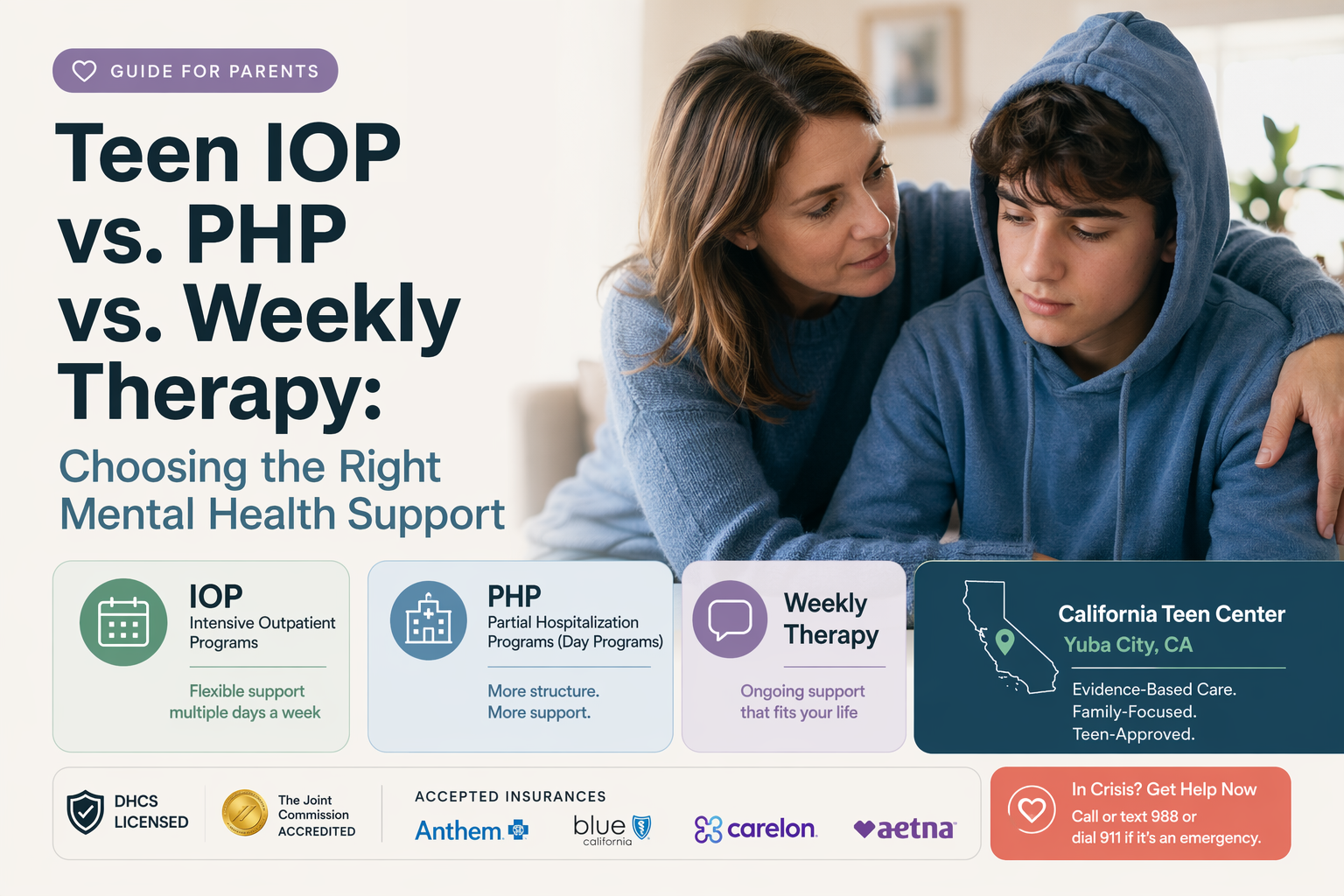
As a parent, navigating the complex world of teen mental health support can feel overwhelming. When your adolescent is struggling with challenges like depression, anxiety, ADHD, or school refusal, finding the right level of care is paramount. You might have heard terms like weekly therapy, Intensive Outpatient Programs (IOP), and Partial Hospitalization Programs (PHP), but understanding their differences and knowing which one is best for your child can be confusing. This article aims to clarify the distinctions between teen IOP vs. PHP vs. weekly therapy, offering guidance to help you make an informed decision for your teen's well-being.
Deciding on the appropriate mental health treatment for your teen is one of the most critical choices you'll make. Each treatment type offers varying levels of intensity, structure, and support, designed to meet different needs. While weekly therapy might be sufficient for some, others may require more robust, structured programs to achieve lasting healing and stability. Our goal is to provide you with the information you need to understand these options better and identify when a higher level of care, like an adolescent mental health program, might be necessary.
At California Teen Center, we understand the urgency and sensitivity of these decisions. Our compassionate team is dedicated to providing evidence-based treatment tailored to adolescents and teens. We believe that empowering parents with clear information is the first step towards getting your child the help they deserve. Let's explore these treatment modalities to help you determine the best path forward for your family.
Comparing Levels of Mental Health Care for Adolescents
Mental health care for adolescents exists on a spectrum, ranging from routine support to more intensive, structured interventions. Understanding this spectrum is crucial for identifying the most effective treatment for your teen's specific needs. The general progression involves increasing levels of supervision, therapeutic hours, and medical oversight as symptoms become more severe or complex.
At the foundational level, we have traditional outpatient services, primarily individual or family therapy sessions. Moving up in intensity, Intensive Outpatient Programs (IOPs) offer more frequent and comprehensive care, allowing teens to remain at home and continue with school. At the highest level of non-residential care, Partial Hospitalization Programs (PHPs), sometimes called Day Programs, provide the most intensive therapeutic structure before considering inpatient hospitalization. Each step up the ladder offers greater support and intervention, critical for addressing persistent or escalating mental health challenges.
Understanding the Spectrum of Care
- Outpatient Therapy (Weekly Therapy): This is the most common and least intensive form of mental health support. It typically involves one or two individual therapy sessions per week, often lasting 45-60 minutes. It's ideal for teens with mild to moderate symptoms who are generally functioning well in school and at home, and who need support managing stress, developing coping skills, or addressing specific life challenges.
- Intensive Outpatient Programs (IOPs): An IOP provides a structured treatment environment for several hours a day, multiple days a week, usually 3-5 days. It combines individual, group, and family therapy, alongside academic support and skill-building. IOPs are designed for teens who require more support than weekly therapy but do not need 24-hour supervision. They allow adolescents to continue living at home and often attend school.
- Partial Hospitalization Programs (PHPs): PHPs offer the highest level of care outside of a residential or inpatient setting. These programs typically run 5 days a week for a significant portion of the day (e.g., 6-8 hours). PHPs provide a highly structured, therapeutic environment with extensive individual and group therapy, psychiatric oversight, and medication management. They are often a step-down from inpatient care or a direct admission for teens with severe symptoms who need constant therapeutic support to stabilize.
When Weekly Therapy May Not Be Sufficient for Your Teen
Weekly therapy is an invaluable tool for many adolescents, offering a safe space to process emotions, learn new coping mechanisms, and navigate developmental challenges. However, there are clear indicators that a teen may require a higher level of care. Recognizing these signs early can be crucial for preventing symptoms from escalating and ensuring your child gets the support they need.
If your teen's symptoms are persistent, worsening, or significantly impacting their daily life despite regular individual therapy, it's a strong signal to consider more intensive options. This could manifest as a decline in academic performance, social withdrawal, or increased conflict at home. Parents often feel a deep sense of worry when they see their child struggling more than weekly sessions can address.
Signs Your Teen Might Need More Intensive Support
- Escalating Symptoms: Your teen's depression or anxiety symptoms are not improving with weekly therapy, or they are getting worse. This might include increased periods of sadness, hopelessness, panic attacks, or obsessive thoughts. For more insights on this, read Supporting Teens with Depression: When a Higher Level of Care May Help.
- Significant Functional Impairment: Your teen is struggling to attend school regularly (school refusal), maintaining friendships, or participating in family activities. They may be withdrawn, isolating themselves, or finding it difficult to manage daily responsibilities. If you're observing Teen Anxiety & School Avoidance: Finding Support for Your Child in California, it's a strong indicator.
- Self-Harm or Suicidal Ideation: Any mention or instance of self-harm, suicidal thoughts, or plans requires immediate, intensive intervention. These are critical signs that weekly therapy is insufficient.
- Increased Risk-Taking Behaviors: Engaging in substance use, reckless behavior, or other actions that put their safety at risk.
- Difficulty Regulating Emotions: Frequent, intense emotional outbursts, extreme mood swings, or an inability to calm themselves down after distress.
- Lack of Progress in Weekly Therapy: If your teen isn't actively engaging in therapy, or if the insights gained in sessions aren't translating into positive changes in their daily life.
These signs indicate that the support system and therapeutic contact offered by weekly sessions might not be robust enough to create the necessary changes. A higher level of care, such as an IOP or PHP, can provide the consistent, comprehensive, and multi-faceted approach needed to stabilize symptoms and build sustainable coping skills.
Deciding Between Intensive Outpatient (IOP) and Partial Hospitalization (PHP)
Once you've determined that your teen requires more than weekly therapy, the next step is often to choose between an Intensive Outpatient Program (IOP) and a Partial Hospitalization Program (PHP). Both offer structured, multi-disciplinary treatment, but they differ significantly in their intensity, duration, and the severity of conditions they typically address. Understanding these distinctions is key to making the best choice for your child.
The primary difference lies in the amount of time spent in treatment and the level of supervision provided. PHP is a more immersive experience, often serving as a bridge between inpatient care and less intensive outpatient options, while IOP offers significant support without disrupting a teen's ability to live at home and attend school. The decision often comes down to your teen's current stability, the severity of their symptoms, and the immediate safety concerns.
Intensive Outpatient Program (IOP)
- Structure and Schedule: IOPs typically meet 3-5 days a week, for 3-4 hours per day. Programs are often scheduled in the late afternoon or evening, allowing teens to attend school during the day. This structure makes an IOP an excellent option for maintaining academic and family routines.
- Therapeutic Components: A core component of an IOP is group therapy, which provides peer support and a safe space for teens to practice new coping skills. Individual therapy, family therapy, educational groups, and psychiatric oversight are also integral.
- Ideal for: Teens experiencing moderate to severe mental health challenges such as depression, anxiety, ADHD, or emerging eating disorders, who are still able to function at home and school but need more intensive support than weekly therapy. It's often a step-down from a PHP or inpatient stay. To learn more about this level of care, explore What is a Teen Intensive Outpatient Program (IOP)? A Parent's Guide.
Partial Hospitalization Program (PHP)
- Structure and Schedule: PHPs are the most intensive form of outpatient treatment, operating almost like a school day. They typically run 5 days a week, for 6-8 hours a day. Teens spend the majority of their weekday in a therapeutic setting, returning home in the evenings.
- Therapeutic Components: PHPs offer a highly structured environment with extensive individual, group, and family therapy. They include psychiatric care, medication management, and often integrated academic support. The constant therapeutic presence allows for crisis intervention and a deep dive into complex issues.
- Ideal for: Teens with more severe or acute mental health crises, including significant suicidal ideation, severe depression or anxiety, substance use issues alongside mental health, or those transitioning out of inpatient psychiatric hospitalization. PHPs are designed for teens who need constant supervision and a highly contained environment to stabilize and develop coping skills.
When making this crucial choice, consider the severity of your teen's symptoms, their safety at home, and their ability to engage with less intensive care. At California Teen Center, we offer both Teen IOP in Yuba City: After-School Mental Health Support for Adolescents and a Teen Partial Hospitalization / Day Program in Yuba City, along with virtual options for California residents. A professional assessment can help determine the most appropriate fit.
The Benefits of Higher Levels of Care at California Teen Center
Choosing a higher level of care like an IOP or PHP can be a pivotal decision for a teen struggling with persistent mental health challenges. At California Teen Center, our programs are specifically designed to provide a comprehensive and structured environment that fosters healing and growth, addressing the multifaceted needs of adolescents and their families. We prioritize a parent-first approach, ensuring you are supported through every step of your child's journey.
Our programs offer numerous benefits beyond what traditional weekly therapy can provide, integrating various therapeutic modalities and professional oversight. The structured nature of IOPs and PHPs ensures consistent engagement, helping teens build resilience and develop healthier coping strategies in a supportive community setting.
Comprehensive Support and Structured Healing
- Multi-Disciplinary Team: Our programs are led by a team of experienced professionals, including psychiatrists, therapists, and academic support specialists, all working collaboratively to provide integrated care. This holistic approach ensures every aspect of your teen's well-being is addressed.
- Intensive Therapeutic Environment: Teens participate in frequent individual, group, and family therapy sessions. Group therapy, in particular, offers a powerful platform for peer support, skill-building, and reducing feelings of isolation.
- Academic Integration: We understand the importance of education. Our programs often include academic support, allowing teens to continue their studies while receiving treatment, minimizing disruption to their schooling. This is particularly beneficial for our Teen IOP in Yuba City: After-School Mental Health Support for Adolescents.
- Psychiatric Oversight and Medication Management: For teens who may benefit from medication, our programs include regular psychiatric oversight and careful medication management, ensuring a safe and effective treatment plan.
- Family Involvement: We believe that family is integral to a teen's recovery. Family therapy and education are core components, empowering parents with tools and strategies to support their child at home.
- Evidence-Based Treatment: California Teen Center utilizes evidence-based therapies such as Cognitive Behavioral Therapy (CBT), Dialectical Behavior Therapy (DBT) skills, and trauma-informed care, proven to be effective in treating adolescent mental health conditions.
- Flexibility with Virtual Options: For families across the state, our Virtual IOP for Teens in California: Statewide Telehealth Mental Health Support provides flexible and accessible care, bringing our expertise directly to your home.
We are proud to be DHCS Licensed and Joint Commission Accredited, signifying our commitment to the highest standards of safety, quality, and patient care. This accreditation provides parents with peace of mind, knowing their child is receiving treatment from a trusted and reputable facility. Our goal is not just symptom reduction, but fostering long-term resilience and equipping teens with the tools they need to thrive.
Navigating Insurance and Next Steps
Understanding the array of teen mental health treatment options is the first step; the next is navigating the practicalities, particularly concerning insurance and how to begin the admissions process. At California Teen Center, we aim to make this as clear and straightforward as possible for parents, recognizing that this journey can already be stressful.
We believe that financial barriers should not prevent adolescents from accessing necessary mental health support. Our team is here to assist you in understanding your insurance benefits and guiding you through the admissions process, ensuring a smooth transition into care for your teen.
Insurance Coverage for Teen Mental Health Programs
California Teen Center proudly works with several major insurance providers to make our IOP and PHP services accessible. We accept:
- Anthem Blue Cross
- Blue Shield of California
- Carelon Behavioral Health
- Aetna
We understand that insurance plans and coverage can vary widely. Our dedicated admissions team can help you verify your teen's insurance benefits quickly and confidentially. This verification will provide clarity on your specific coverage for our programs. For more information on navigating coverage, refer to Insurance Coverage for Teen Mental Health Programs in California: A Parent's Guide.
Taking the Next Step
If you've identified that your teen might need more than weekly therapy, or if you're weighing the options between an IOP and a PHP, the best course of action is to seek a professional assessment. Our clinical team can conduct a thorough evaluation to understand your teen's specific needs, challenges, and strengths. This assessment will help determine the most appropriate level of care and personalized treatment plan.
Don't hesitate to reach out. Our compassionate team is available to answer your questions, discuss your concerns, and guide you through the process. A single phone call can be the first step towards your teen's journey to healing and improved well-being.
Frequently Asked Questions About Teen Mental Health Treatment
Q: What's the main difference between an IOP and a PHP for teens?
A: The main difference is intensity and duration. A Partial Hospitalization Program (PHP) is more intensive, meeting for longer hours (typically 6-8 hours) 5 days a week, often serving as a step-down from inpatient care. An Intensive Outpatient Program (IOP) is less intensive, meeting for fewer hours (3-4 hours) 3-5 days a week, allowing teens to typically attend school.
Q: How do I know if my teen needs more than weekly therapy?
A: Signs your teen might need more intensive support include worsening symptoms despite weekly therapy, significant decline in school performance or attendance (school refusal), social withdrawal, self-harm or suicidal ideation, increased risk-taking behaviors, or an inability to manage emotions effectively.
Q: Can my teen continue school during an IOP or PHP?
A: For an IOP, yes, most teens can continue attending school as programs are often scheduled after school hours. For a PHP, it depends on the program; many PHPs integrate academic support and schoolwork into their daily schedule, as the teen is in treatment for most of the day.
Q: Does California Teen Center accept insurance for their programs?
A: Yes, California Teen Center accepts Anthem Blue Cross, Blue Shield of California, Carelon Behavioral Health, and Aetna insurance. We encourage parents to contact us directly for insurance verification to understand their specific coverage.
Q: How long do these programs typically last?
A: The duration of an IOP or PHP varies depending on the teen's individual needs and progress. Programs can last anywhere from several weeks to a few months, with the goal of transitioning to a lower level of care, such as weekly therapy or outpatient support, once stable.
Conclusion
Choosing the right mental health support for your teenager is a deeply personal and often challenging decision. Understanding the differences between weekly therapy, Intensive Outpatient Programs (IOP), and Partial Hospitalization Programs (PHP) is a crucial first step in finding the most effective path to healing. While weekly therapy offers essential support for milder challenges, for teens facing more complex or escalating issues, the structured, comprehensive care of an IOP or PHP may be vital for their well-being.
At California Teen Center, we are committed to providing the highest quality of care, guided by compassion and expertise. Whether your teen needs the flexibility of an after-school IOP in Yuba City, the intensive structure of a PHP, or the accessibility of our Virtual IOP across California, our DHCS Licensed and Joint Commission Accredited programs are designed to meet their unique needs. We empower adolescents to build resilience, develop healthy coping skills, and reclaim their lives.
If you are a parent grappling with your teen's mental health, please know you are not alone, and help is available. Don't hesitate to reach out to our team at California Teen Center for a confidential assessment. Together, we can determine the most appropriate level of care to help your child thrive. Your teen's journey to recovery starts with a conversation.