Blog Article
ADHD Evaluation & 504/IEP Support for Teens in California
Discover comprehensive ADHD evaluation, 504 plans, and IEP support for teens in California. Learn how to get an ADHD diagnosis and academic accommodations for your child.
ADHD Evaluation & 504/IEP Support for Teens in California
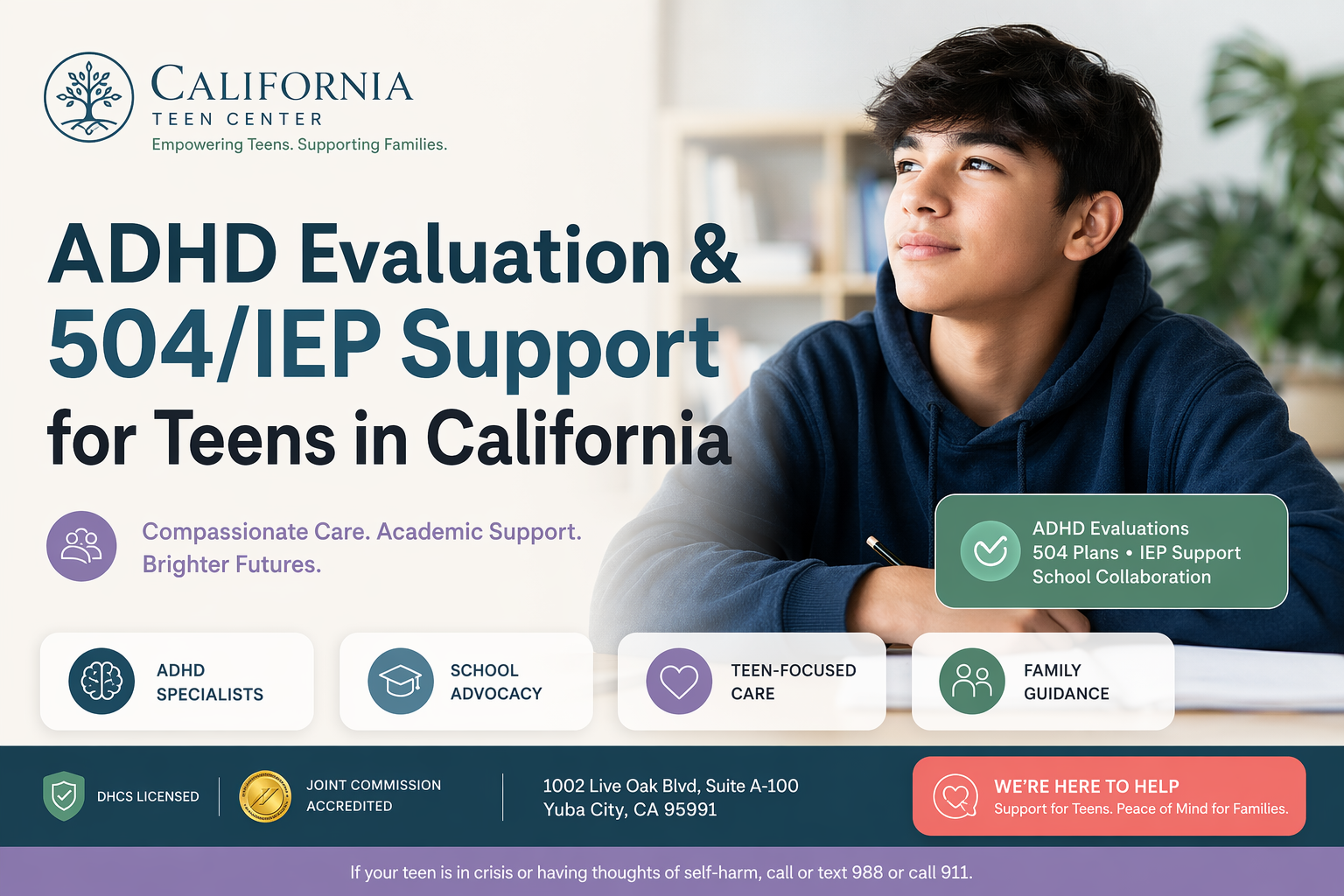
Watching your teen struggle with focus, organization, or impulsivity can be incredibly challenging, especially when it impacts their academic performance, self-esteem, and daily life. You might suspect Attention-Deficit/Hyperactivity Disorder (ADHD) is at play, but navigating the path to an official ADHD evaluation, diagnosis, and securing vital educational support like a 504 Plan or IEP for teens in California can feel overwhelming. Many parents find themselves at a loss for where to begin, worried about their child's future, and exhausted by the constant battle with school assignments or behavioral issues.
At California Teen Center, we understand these concerns deeply. We know that an accurate diagnosis and tailored support are not just about academic success; they're about empowering your teen to thrive, build confidence, and manage the unique challenges ADHD presents. This comprehensive guide will walk you through everything you need to know about ADHD evaluations in California, the critical differences between 504 Plans and IEPs, and how to advocate for the best educational support for ADHD teens. We'll also explore the integrated treatment options available that go beyond school accommodations, helping your adolescent develop coping strategies and essential life skills to flourish. If your teen is exhibiting signs of ADHD, or if you're struggling to get them the right support in school, this article is designed to provide clarity, guidance, and hope.
Comprehensive ADHD Evaluation Services for Adolescents in California
An accurate diagnosis is the cornerstone of effective support for a teen with suspected ADHD. Without a thorough ADHD evaluation, the challenges your adolescent faces—be it school avoidance, struggles with homework, or emotional dysregulation—might be misattributed, leading to ineffective interventions and continued frustration. In California, a comprehensive evaluation for teens goes beyond a simple checklist; it's a multi-faceted process designed to provide a clear picture of your child's cognitive functioning, behavior, and emotional well-being.
Why an Accurate Diagnosis Matters
An ADHD diagnosis is not just a label; it's a roadmap. It helps parents, educators, and mental health professionals understand the underlying reasons for a teen's difficulties. This understanding then informs the most appropriate and effective strategies for academic accommodation, therapeutic interventions, and skill-building. An accurate diagnosis can:
- Validate your teen's experiences and reduce feelings of inadequacy.
- Open doors to necessary accommodations in school (504 Plan, IEP).
- Guide treatment plans, including therapy, medication management, and executive function coaching.
- Help families understand and navigate challenges more effectively.
What Does a Comprehensive Evaluation Entail?
A thorough teen ADHD diagnosis California process typically involves several key components, often conducted by a team of qualified professionals, such as psychologists, psychiatrists, and educational specialists. At California Teen Center, our evaluations are designed to be holistic and sensitive to the unique needs of adolescents:
- Clinical Interviews: Extensive discussions with parents/guardians to gather developmental history, review symptoms, and understand family dynamics. Interviews with the teen are also crucial to get their perspective.
- Behavioral Rating Scales: Standardized questionnaires completed by parents, teachers, and often the teen themselves, to assess ADHD symptoms across various settings (home, school, social).
- Cognitive and Achievement Testing: While not solely diagnostic for ADHD, these tests can identify co-occurring learning disabilities, assess executive functions (planning, organization, working memory), and rule out other potential causes for academic struggles.
- Medical History Review: To rule out any medical conditions that might mimic ADHD symptoms.
- Observation: In some cases, direct observation of the teen in academic or social settings can provide valuable insights.
By combining these elements, a clear and comprehensive profile emerges, allowing for a precise diagnosis and personalized recommendations for support. Getting a robust ADHD evaluation in Yuba City or elsewhere in California is the first vital step towards helping your teen unlock their full potential.
Navigating 504 Plans and IEPs for Enhanced Academic Success
Once your teen receives an ADHD diagnosis, the next crucial step is ensuring they receive the necessary academic support within the school system. This is where 504 Plans and IEPs for teens come into play. While both are designed to provide accommodations and services for students with disabilities, they differ significantly in their scope and legal basis. Understanding these distinctions is key to advocating effectively for your child's educational needs.
Understanding 504 Plans
A 504 Plan is a written document that outlines how the school will provide support and remove barriers for a student with a disability so they can access their education. It falls under Section 504 of the Rehabilitation Act of 1973, a civil rights law that prohibits discrimination against individuals with disabilities.
- Who Qualifies? A student qualifies for a 504 Plan if they have a physical or mental impairment that substantially limits one or more major life activities (e.g., learning, concentrating, reading, thinking). ADHD often meets this criterion.
- What It Provides: Primarily, a 504 Plan offers accommodations and modifications to the learning environment. These are adjustments that help a student learn the same material as their peers.
- Examples of Accommodations:
- Extended time on tests and assignments.
- Preferential seating (e.g., away from distractions).
- Notes provided by the teacher or a peer.
- Breaks during class or tests.
- Use of organizational tools (planners, digital reminders).
- Reduced homework load or modified assignments.
- Access to a quiet testing environment.
- Assistance with task initiation and completion.
A 504 Plan does not modify the curriculum or provide specialized instruction; it levels the playing field so a student with ADHD can perform at their intellectual capacity. For many teens managing ADHD, particularly those with milder symptoms or those who don't require significant instructional changes, a 504 Plan can be highly effective.
Understanding Individualized Education Programs (IEPs)
An IEP (Individualized Education Program) is a more comprehensive and legally binding document designed for students who require specialized instruction and related services to make progress in the general education curriculum. IEPs are governed by the Individuals with Disabilities Education Act (IDEA).
- Who Qualifies? A student qualifies for an IEP if they have one of the 13 specified disabilities under IDEA (ADHD can fall under "Other Health Impairment") AND their disability adversely affects their educational performance, requiring specialized instruction. This often means the student cannot make effective progress in general education with accommodations alone.
- What It Provides: An IEP includes not only accommodations but also specialized instruction tailored to the student's unique learning needs, goals, and often related services (e.g., speech therapy, occupational therapy, counseling).
- Key Differences from 504 Plans:
- Specialized Instruction: IEPs include specific, measurable goals and specialized teaching methods.
- Services: IEPs can provide a range of related services (e.g., counseling, behavioral support).
- Legal Protections: IEPs offer more extensive legal protections and parental rights under IDEA.
- Team: The IEP team includes parents, teachers, special education teachers, school administrators, and often other specialists.
Securing either a 504 Plan or an IEP requires parent advocacy, often involving formal requests for evaluation and attendance at meetings. Don't be afraid to ask for help or bring an advocate with you. This process can be daunting, especially if your teen is also experiencing Teen Anxiety & School Avoidance: Finding Support for Your Child in California. Early and consistent communication with the school is vital to ensure your teen receives the educational support for ADHD teens they need to succeed.
Integrated Support Systems for Teens Living with ADHD
While academic accommodations like 504 Plans and IEPs are essential, managing ADHD effectively often requires support that extends beyond the classroom. For many teens, ADHD impacts more than just their grades; it can affect their emotional regulation, social interactions, self-esteem, and executive functioning skills crucial for daily life. An integrated approach, combining therapeutic interventions with skill-building programs, can make a profound difference in helping your adolescent thrive.
Beyond School Accommodations: A Holistic Approach
Effective managing ADHD in adolescents involves addressing the full spectrum of challenges they face. This includes:
- Executive Functioning Skills: Teens with ADHD often struggle with planning, organization, time management, impulse control, and working memory. Developing these skills is critical for academic success, personal responsibility, and future independence.
- Emotional Regulation: ADHD can exacerbate feelings of frustration, anxiety, and anger due to constant struggles or perceived failures. Learning to manage these emotions is key to mental well-being.
- Social Skills: Impulsivity or inattention can sometimes lead to difficulties in social interactions. Support can help teens build stronger relationships.
- Self-Esteem and Confidence: Years of struggling can erode a teen's self-worth. Building resilience and recognizing strengths are vital for their overall development.
Therapeutic and Programmatic Support
At California Teen Center, we believe in a multi-pronged approach that complements school-based support. Our programs are designed to provide the intensive, structured environment many teens with ADHD need to develop lasting skills and coping mechanisms.
- Intensive Outpatient Programs (IOP): For teens who need more support than weekly therapy but don't require inpatient care, our IOPs offer structured group therapy, individual counseling, and family support. These programs focus on skill development in areas like executive functioning, emotional regulation, and social communication. Our What is a Teen Intensive Outpatient Program (IOP)? A Parent's Guide explains this level of care in detail.
- Partial Hospitalization Programs (PHP)/Day Programs: For a higher level of structure, our PHP programs provide daily, intensive therapeutic support, much like a school day, while allowing teens to return home in the evenings. This can be particularly beneficial for adolescents whose ADHD is significantly impacting their ability to function. Understanding the difference between these options is crucial, as highlighted in our article Teen IOP vs. PHP vs. Weekly Therapy: Choosing the Right Mental Health Support.
- Therapy (Individual & Group): Cognitive Behavioral Therapy (CBT) and Dialectical Behavior Therapy (DBT) can help teens with ADHD learn strategies for managing impulses, improving focus, and regulating emotions. Group therapy also provides a supportive environment for practicing social skills and realizing they're not alone.
- Psychiatric Oversight: For some teens, medication can be a helpful component of their ADHD management plan. Our psychiatric oversight ensures that any medication prescribed is carefully monitored and integrated into a comprehensive treatment strategy.
- Outpatient/Step-Down Support: As teens progress, they may transition to less intensive support, which can include continued individual therapy, coaching, and check-ins to maintain progress.
Integrating these forms of support with school accommodations creates a powerful safety net, empowering teens with ADHD to navigate challenges, build resilience, and ultimately lead fulfilling lives. We also offer Comprehensive Teen Mental Health Treatment Options in California that can be tailored to individual needs.
The Role of Parents and Family in ADHD Management
Parents and family members play an indispensable role in the successful management of a teen's ADHD. Your involvement, understanding, and advocacy are critical components of an integrated support system that helps your adolescent not just cope, but truly thrive. Creating a supportive home environment and actively participating in their treatment and educational planning can significantly impact your teen's journey.
Education and Empowerment
The first step for parents is to become as informed as possible about ADHD. Understanding how ADHD impacts brain function, behavior, and emotional regulation can help you respond with empathy and effective strategies rather than frustration. Resources, workshops, and support groups can provide invaluable knowledge and a sense of community. This knowledge empowers you to:
- Communicate effectively: Learn how to talk to your teen about their ADHD in a way that fosters understanding and self-acceptance.
- Set realistic expectations: Recognize that some struggles are a direct result of ADHD, not defiance, and adjust expectations accordingly while still encouraging growth.
- Implement consistent routines: Structure and predictability can be incredibly beneficial for teens with ADHD.
Creating a Supportive Home Environment
A home environment that supports a teen with ADHD is one that is structured, predictable, and forgiving. It's not about being lenient, but about minimizing triggers and maximizing opportunities for success.
- Structure and Routine: Establish consistent schedules for homework, chores, bedtime, and leisure activities. Use visual aids like calendars or planners.
- Organization Systems: Work with your teen to create accessible and logical systems for their belongings, school supplies, and digital files.
- Clear Expectations and Consequences: Define rules clearly and apply consequences consistently, focusing on natural and logical outcomes.
- Positive Reinforcement: Focus on praising effort and celebrating small victories to build self-esteem.
- Minimize Distractions: Create a dedicated, quiet space for homework and study.
Collaboration and Advocacy
Your role as an advocate for your teen is ongoing, especially when it comes to navigating school systems and healthcare.
- Partner with the School: Maintain open communication with teachers, counselors, and administrators. Regularly check in on the effectiveness of 504 Plan or IEP accommodations.
- Engage with Treatment Teams: Actively participate in family therapy sessions, parent education groups, and meetings with your teen's therapists and psychiatrists.
- Financial Planning: Explore options for covering treatment costs. Insurance Coverage for Teen Mental Health Programs in California: A Parent's Guide can offer insights into navigating insurance benefits for ADHD treatment.
- Self-Care for Parents: Supporting a teen with ADHD can be demanding. Remember to prioritize your own well-being to sustain your energy and patience.
By actively engaging in these areas, you become a powerful ally in your teen's journey, helping them develop the skills and confidence to manage their ADHD and thrive in all aspects of their life.
Frequently Asked Questions About Teen ADHD Evaluation & Support
Navigating the world of ADHD evaluations and support for your teen can bring up many questions. Here are some of the most common inquiries parents have:
Q1: How long does an ADHD evaluation for a teen typically take?
A1: A comprehensive ADHD evaluation for a teen can vary in length, but typically involves multiple sessions spread over several weeks. This includes initial interviews, administration of various tests and rating scales, and a feedback session to discuss results and recommendations. It's not a one-day process, as it requires gathering information from multiple sources (parents, teachers, teen) and careful analysis.
Q2: What's the biggest difference between a 504 Plan and an IEP?
A2: The core difference is that a 504 Plan provides accommodations to help a student with a disability access the general education curriculum, while an IEP provides specialized instruction and related services for students whose disability significantly impacts their academic performance, requiring a modified curriculum. An IEP is more comprehensive and offers stronger legal protections under IDEA.
Q3: Can my teen refuse to participate in an ADHD evaluation or therapy?
A3: While teens cannot refuse a school-initiated evaluation, their cooperation is crucial for accurate results. For therapy, teens cannot be forced, but clinicians are skilled at building rapport and explaining the benefits in a way that resonates with adolescents. Open communication and involving them in the decision-making process can increase their willingness to participate.
Q4: My teen is doing well academically but struggles socially and emotionally due to ADHD. Can they still get support?
A4: Absolutely. ADHD impacts more than just academics. If your teen's ADHD significantly affects major life activities such as social interaction, emotional regulation, or daily functioning, they may still qualify for support like a 504 Plan for accommodations, or therapeutic interventions like individual or group therapy and executive function coaching. Academic success alone doesn't negate the need for help in other areas.
Q5: How can I start the process of getting an ADHD evaluation for my teen in California?
A5: You can start by discussing your concerns with your pediatrician, who may offer initial screening or refer you to a specialist. Alternatively, you can directly seek out mental health treatment centers like California Teen Center, which offers comprehensive ADHD evaluations. For school support, you'll need to formally request an evaluation from your child's school district to determine eligibility for a 504 Plan or IEP.
Empowering Your Teen with ADHD: A Path Forward
The journey of supporting a teen with ADHD is a marathon, not a sprint. It requires patience, persistence, and a willingness to explore various avenues of support. From securing an accurate ADHD evaluation to advocating for a comprehensive 504 Plan or IEP for teens in their school, each step is crucial in building a foundation for their success. Beyond academic accommodations, integrating therapeutic support, skill-building, and family involvement creates a holistic environment where your adolescent can truly flourish.
At California Teen Center, located in Yuba City and serving families across California with virtual options, we are committed to providing the expert, compassionate care your teen deserves. We understand the complexities of managing ADHD in adolescents and offer a range of programs designed to address their unique needs—from comprehensive evaluations and psychiatric oversight to Intensive Outpatient Programs (IOP) and Partial Hospitalization Programs (PHP) that focus on executive functioning, emotional regulation, and social skills. Don't let your teen struggle in silence. Reach out today to learn how our dedicated team can help your child navigate their ADHD challenges, build resilience, and step confidently towards a brighter future.
Ready to explore how we can support your family?
- Contact Us to speak with our admissions team.
- Verify Your Insurance to understand your coverage options.
- Explore our full range of Comprehensive Teen Mental Health Treatment Options in California for holistic support.