Blog Article
Teen Anxiety & School Avoidance: Finding Support for Your Child in California
Is your teen struggling with school avoidance due to anxiety? Discover effective strategies and specialized treatment options for adolescent anxiety in California, including IOP and PHP programs. Get help managing teen stress and phobias today.
Teen Anxiety & School Avoidance: Finding Support for Your Child in California
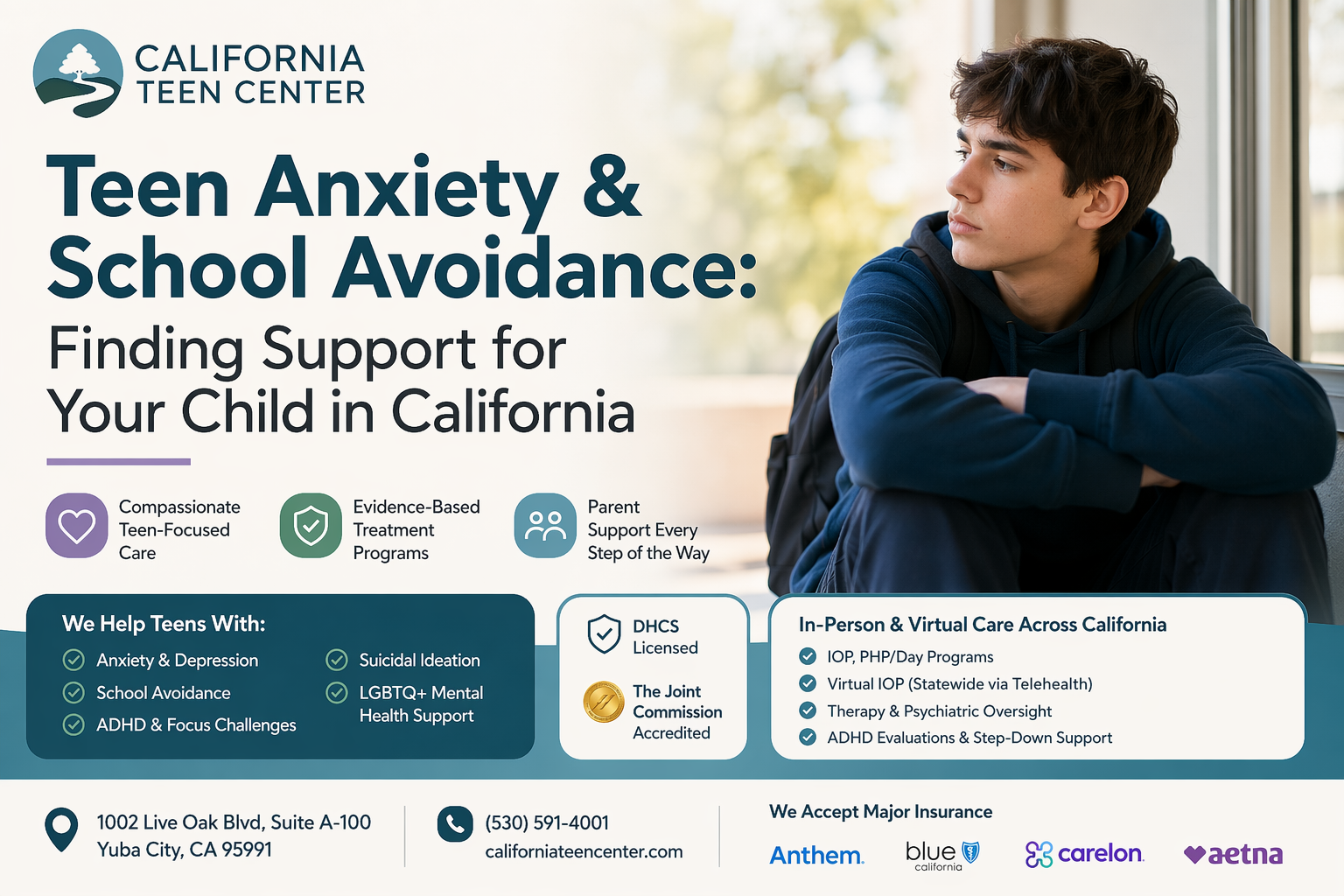
Watching your teenager struggle with teen anxiety school avoidance can be heartbreaking and incredibly frustrating. What starts as a few missed days often escalates into a persistent refusal to attend school, leaving parents feeling helpless and their child isolated. This isn't just about truancy; it's a cry for help, a visible symptom of overwhelming anxiety that makes school environments feel unbearable. For many adolescents, the pressures of academics, social dynamics, and the fear of judgment become too much to bear, leading them to withdraw.
In California, parents are increasingly seeking specialized support for their children caught in this challenging cycle. Understanding the deep roots of this school avoidance, often tied to underlying anxiety, is the first step toward effective intervention. This article will delve into the complex relationship between adolescent anxiety and school challenges, explore strategies parents can implement, and highlight when more structured mental health treatment, like that offered at California Teen Center, can make a life-changing difference.
You are not alone in navigating this. With the right understanding and support, your teen can learn to manage their anxiety, overcome school refusal, and re-engage with their education and peers.
Understanding the Complex Link Between Anxiety and School Challenges
For many teens, school is a place of growth, learning, and social connection. But for others, it becomes a source of intense dread and fear, often fueled by anxiety. When adolescent anxiety treatment is needed, it's crucial to first understand how anxiety manifests and contributes to school avoidance. This isn't laziness or defiance; it's a profound emotional response to perceived threats or overwhelming situations.
Anxiety in teenagers can take many forms, each impacting school attendance differently:
- Generalized Anxiety Disorder (GAD): Teens with GAD experience excessive worry about everyday events, including school performance, friendships, or future outcomes. The constant "what if" scenarios can make attending school feel like walking into a minefield of potential problems.
- Social Anxiety Disorder: The fear of being judged, embarrassed, or humiliated by peers or teachers can be paralyzing. This often leads to avoiding presentations, group work, cafeteria lunches, or even walking through crowded hallways.
- Panic Disorder: Unexpected and recurrent panic attacks can strike anywhere, including school. The fear of having another panic attack in front of others can cause a teen to avoid school altogether, believing it's the only way to prevent such a terrifying experience.
- Specific Phobias: Fear of certain situations or objects, such as public speaking, testing, or even specific teachers, can trigger intense anxiety and school refusal.
- Separation Anxiety: While often associated with younger children, separation anxiety can also affect teens, particularly after periods of isolation or significant life changes. The thought of being away from a primary caregiver can be overwhelming.
When a teen experiences any of these anxieties in relation to school, their body's "fight, flight, or freeze" response kicks in. School avoidance becomes a "flight" response—a coping mechanism to escape the perceived threat. This can lead to a vicious cycle: missing school increases academic pressure and social isolation, which in turn fuels more anxiety, making it even harder to return. The impact extends beyond grades, affecting their confidence, social development, and overall well-being. Recognizing these patterns is the first step in seeking appropriate school refusal help for teens.
Effective Strategies to Support Teens Experiencing School Avoidance
When facing teen anxiety school avoidance, parents often feel at a loss. While professional help is usually essential, there are practical strategies you can implement at home and in collaboration with the school to help your teen. These approaches focus on open communication, validating feelings, and gradually reintroducing positive school experiences.
Fostering Open Communication and Validation
Encourage your teen to talk about their fears without judgment. Start conversations by acknowledging their distress, "I can see you're really struggling with going to school, and that must be incredibly hard." Avoid dismissive phrases like "just go" or "you're being dramatic." Instead, ask open-ended questions: "What specifically makes school feel so difficult right now?" or "What's the worst thing that could happen if you went to school today?" Validating their feelings doesn't mean agreeing with their avoidance; it means acknowledging their emotional experience.
Collaborative Approach with the School
Your teen's school can be a vital partner. Reach out to counselors, teachers, or administrators to explain the situation. They may be able to offer accommodations such as:
- A designated "safe space" where your teen can go if they feel overwhelmed.
- Adjusted workloads or extended deadlines for assignments.
- Phased re-entry plans, starting with partial days or specific classes.
- Modified testing environments.
For teens with significant challenges, considering a 504 plan or an Individualized Education Program (IEP) might be beneficial. These legal documents ensure your child receives necessary accommodations to access their education. For more insights on this, you can explore resources like ADHD Evaluation & 504/IEP Support for Teens in California. Collaborating with school staff creates a supportive network that can ease your teen's transition back into the classroom.
Gradual Exposure and Skill Building
One of the most effective ways to combat anxiety is through gradual exposure. This means slowly reintroducing your teen to school environments in manageable steps. This might involve:
- Visiting the school after hours.
- Attending just one preferred class.
- Meeting with a trusted teacher or friend on campus.
- Practicing relaxation techniques before school.
Simultaneously, help your teen develop coping skills for managing teen stress and phobias. This could include deep breathing exercises, mindfulness, positive self-talk, or identifying triggers. The goal is to equip them with tools to face anxiety, rather than avoid it. Remember, consistency and patience are key.
When a Structured Program May Help Re-engage Teens with Education and Life
While at-home strategies are important, there often comes a point when a teen's anxiety and school avoidance require a more comprehensive and structured approach. If your child's distress is severe, persistent, or if their functioning is significantly impaired, it might be time to consider a higher level of care beyond weekly therapy sessions. This is especially true when avoidance patterns are deeply entrenched, or traditional outpatient services haven't yielded sufficient progress.
Intensive Outpatient Programs (IOP) and Partial Hospitalization Programs (PHP), also known as Day Programs, offer a level of support that bridges the gap between traditional weekly therapy and inpatient hospitalization. These programs provide a safe, therapeutic environment where teens can receive focused treatment for their anxiety and develop essential coping skills, all while maintaining connections to their home and, often, their academic life.
The Benefits of Intensive Programs for School Avoidance:
- Integrated Therapeutic Approach: IOP and PHP combine individual therapy, group therapy, family therapy, and sometimes academic support. This holistic model addresses the multifaceted nature of anxiety and school refusal, teaching cognitive-behavioral techniques, dialectical behavior therapy skills, and emotional regulation strategies.
- Structured Environment: The consistent schedule and supportive peer group within these programs can be incredibly beneficial. Teens learn that they are not alone in their struggles and can practice new social and coping skills in a controlled setting.
- Academic Support Integration: Many programs, like those at California Teen Center, are designed to work around a teen's academic schedule or provide dedicated time for schoolwork. This helps prevent further academic decline and eases the transition back into a full-time school environment. For instance, our Teen IOP in Yuba City: After-School Mental Health Support for Adolescents allows teens to attend treatment without missing core school hours.
- Skill Building for Re-Engagement: Through experiential therapies and direct coaching, teens gain practical skills to manage anxiety in real-world situations, including school. This empowers them to face fears rather than avoid them, slowly breaking the cycle of school refusal.
Deciding between weekly therapy, an IOP, or a PHP can be complex. Understanding the differences is crucial for choosing the best fit for your child's needs. For a detailed comparison, consider reading Teen IOP vs. PHP vs. Weekly Therapy: Choosing the Right Mental Health Support. These programs offer the intensity needed to create lasting change, providing teens with the tools and confidence to overcome anxiety and successfully return to school and their lives.
Why California Teen Center is a Trusted Partner for Adolescent Anxiety Treatment
At California Teen Center, we understand the profound impact that teen anxiety school avoidance has on adolescents and their families. Located in Yuba City, CA, and offering virtual services statewide, we are dedicated to providing compassionate, evidence-based adolescent anxiety treatment that helps teens re-engage with life, including their education.
Our center, owned by Addiction Resource Center LLC, specializes in mental health treatment for adolescents, offering a continuum of care tailored to individual needs:
- Intensive Outpatient Programs (IOP): For teens who need more support than weekly therapy but can still live at home. Our Yuba City IOP is structured to provide after-school care, allowing teens to maintain their academic progress. You can learn more about What is a Teen Intensive Outpatient Program (IOP)? A Parent's Guide.
- Partial Hospitalization Programs (PHP/Day Programs): Our most intensive level of care outside of inpatient settings, offering daily therapeutic programming. This program is ideal for teens needing significant intervention for severe school refusal or anxiety.
- Virtual IOP (Statewide California via Telehealth): For families across California, our virtual program provides flexible, accessible mental health support from the comfort of home, ensuring distance is not a barrier to quality care.
- Outpatient/Step-Down Support: As teens progress, we offer less intensive support to ensure a smooth transition and continued success.
- Therapy and Psychiatric Oversight: Our team includes experienced therapists and psychiatric professionals who provide individual, group, and family therapy, along with medication management when necessary.
California Teen Center is proud to be DHCS Licensed and Joint Commission Accredited, ensuring the highest standards of safety, quality, and clinical excellence. We accept major insurance providers including Anthem, Blue Shield of California, Carelon, and Aetna, making specialized care more accessible for families. For details on coverage, refer to our Insurance Coverage for Teen Mental Health Programs in California: A Parent's Guide. Our parent-first approach means we partner with you every step of the way, providing guidance and support as your teen learns to manage their anxiety and thrive.
Frequently Asked Questions About Teen Anxiety & School Avoidance
Q1: Is school avoidance the same as truancy?
A1: No, not necessarily. While both involve missing school, school avoidance (or school refusal) is driven by emotional distress, such as anxiety or phobias, making it genuinely difficult for a teen to attend. Truancy typically implies intentional absence without emotional distress. School avoidance is a mental health issue that requires understanding and support.
Q2: How can I tell if my teen's anxiety is severe enough for a structured program?
A2: If your teen's anxiety is causing significant impairment in their daily life, such as consistent school refusal, withdrawal from friends, severe panic attacks, or if weekly therapy isn't yielding sufficient progress, a structured program like an Intensive Outpatient Program (IOP) or Partial Hospitalization Program (PHP) might be beneficial. These programs offer a higher level of support and more intensive therapy.
Q3: Will my teen fall behind academically if they attend a day program?
A3: Many structured programs, including those at California Teen Center, are designed to integrate academic support. Our IOPs are often after-school, and PHP programs frequently include dedicated time for schoolwork or coordination with the teen's school to manage assignments. The goal is to help your teen stabilize their mental health so they can successfully re-engage with their education.
Q4: What role do parents play in a teen anxiety treatment program?
A4: Parents are crucial partners in their teen's treatment. Family therapy is a core component of many programs, helping families develop healthier communication patterns and coping strategies. Parents are typically involved in setting goals, understanding therapeutic techniques, and supporting their teen's progress outside of treatment hours.
Q5: What if my teen refuses to participate in treatment?
A5: It's common for teens to resist treatment initially, especially if they are withdrawn or feeling overwhelmed. A compassionate, non-judgmental approach is essential. Focus on the benefits of treatment, express your concern for their well-being, and consider involving a professional who can speak with your teen and help them understand how treatment can alleviate their suffering.
Take the First Step Towards Healing and Re-engagement
Navigating teen anxiety school avoidance is undoubtedly one of the most challenging experiences a parent can face. The feelings of helplessness, frustration, and worry are completely normal. However, it's vital to remember that you and your teen are not alone, and effective support is available in California. Addressing underlying anxiety with specialized adolescent anxiety treatment is the key to helping your child overcome school refusal and reclaim their sense of well-being.
At California Teen Center, we are committed to providing the expert, compassionate care your family needs. Our comprehensive programs, delivered by DHCS Licensed and Joint Commission Accredited professionals, offer a path forward for teens struggling with anxiety, school challenges, and other mental health concerns. From intensive outpatient programs in Yuba City to virtual IOP options across the state, we provide the tools, support, and therapeutic environment necessary for healing and growth.
If your teen is struggling with anxiety, school refusal, or other mental health challenges, please reach out. Taking the first step can feel daunting, but it opens the door to a brighter future for your child.
Ready to find the right support for your teen? Contact Us Today or Verify Your Insurance Coverage to explore our specialized programs and take the next step toward their recovery.
Crisis Disclaimer: If your teen is experiencing a mental health crisis or expressing thoughts of self-harm, please seek immediate professional help. Call or text 988 (Suicide & Crisis Lifeline), go to the nearest emergency room, or contact a mental health professional immediately.